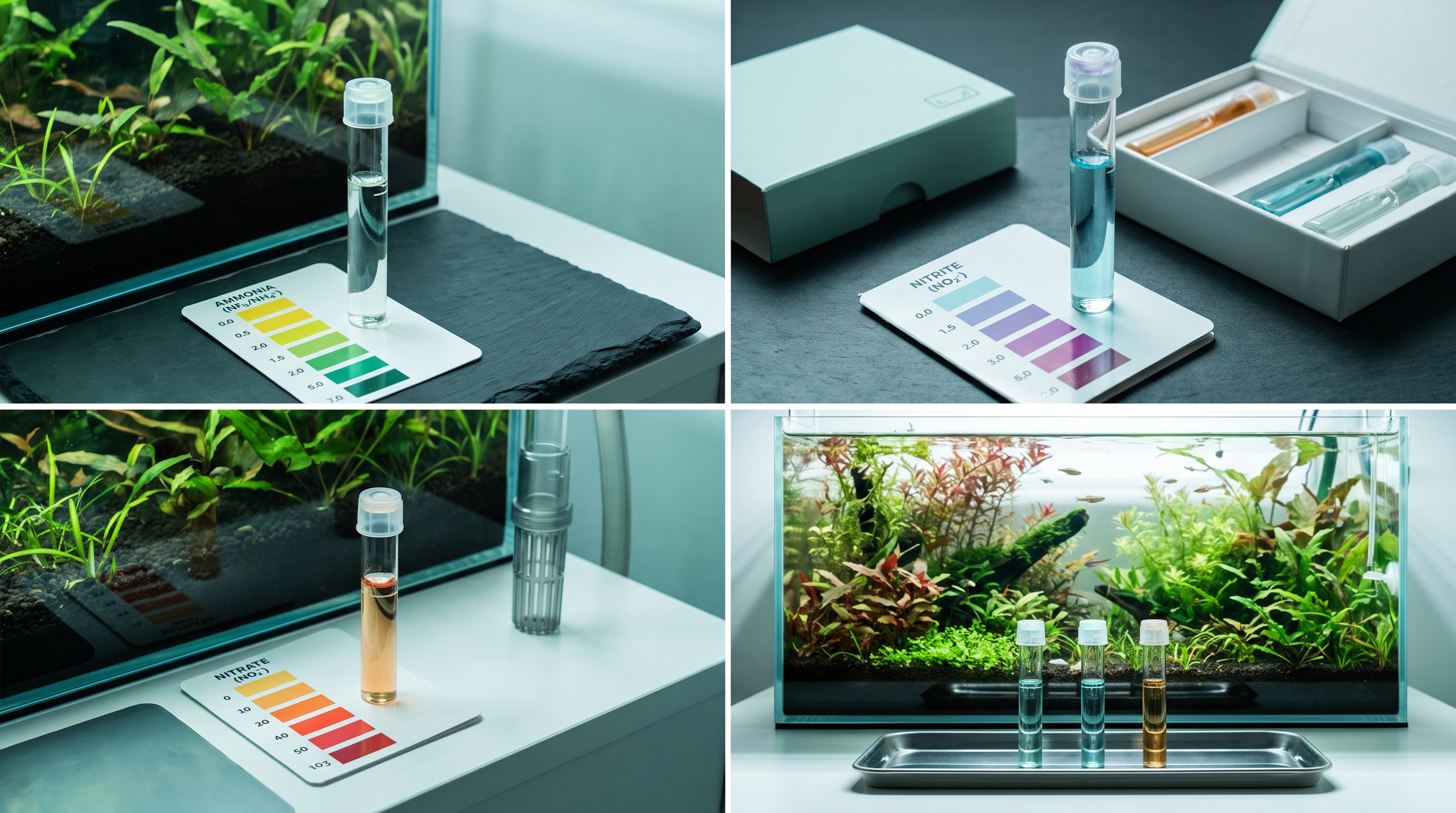
If you’ve just set up a fish tank and someone told you to wait for it to “cycle” before adding fish, here’s the direct answer: the aquarium nitrogen cycle is the process where beneficial bacteria convert toxic ammonia (from fish waste and uneaten food) into nitrite, then into nitrate. Ammonia and nitrite are the two compounds that hurt fish. Nitrate is far less toxic and gets managed with water changes. Your tank is “cycled” once that bacteria colony is established enough to handle waste as fast as it’s produced, keeping ammonia and nitrite at zero.
That’s the whole idea. The rest of this guide covers why it works this way, what each number on your test kit is telling you, and how to know when it’s genuinely safe to add fish.
What the Nitrogen Cycle Actually Is
Think of your tank as a small, self-contained ecosystem. Fish eat, then produce waste. That waste, plus uneaten food and decaying plant matter, breaks down into ammonia. Left alone, ammonia builds up fast, and it’s dangerous. It can burn fish gills and skin at surprisingly low concentrations.
Nature’s fix is bacteria. One group, often called nitrifying bacteria, feeds on ammonia and converts it into nitrite. Nitrite is still toxic to fish, just in a different way. It interferes with how their blood carries oxygen. A second, separate group of bacteria then feeds on that nitrite and converts it into nitrate.
As general background from microbiology, not something you need to memorize: the ammonia-eating group is usually made up of bacteria in the Nitrosomonas family, and the nitrite-eating group is usually in the Nitrospira family. What actually matters for your tank is simpler than the names: they’re two separate populations doing two separate jobs, and each one has to grow before it can keep up with what the other produces.
Nitrate is the end product, and it’s the one you’re supposed to end up with. It’s not harmless, but it takes much higher concentrations to hurt fish than ammonia or nitrite do. You manage nitrate with routine water changes or by growing plants that consume it, rather than by growing more bacteria.
So the chain looks like this:
Fish waste and food → Ammonia → Nitrite → Nitrate → removed via water changes or plants
Aqueon’s rundown of the process describes this plainly: freshwater fish release waste as ammonia, nitrifying bacteria living in your filter, gravel, and other surfaces convert that ammonia to nitrite, and a different set of bacteria convert the nitrite to nitrate. Nitrate isn’t considered toxic to fish unless it’s allowed to build up too high. Aquarium Co-Op’s beginner’s guide to the cycle frames the same process even more simply: nature makes food, fish eat it and produce waste, and nature breaks that waste back down so it can become food again. Ammonia, nitrite, and nitrate are just the checkpoints along that path.
Where the Bacteria Actually Live
It helps to know that your filter isn’t just pushing water around. Per Aqueon, an aquarium filter typically does three jobs: mechanical filtration (trapping debris), chemical filtration (like carbon pulling dissolved compounds out of the water), and biological filtration, which is the nitrogen cycle itself happening on a surface. Your filter media, whether it’s sponge, ceramic rings, or floss, is really a growth surface for both groups of bacteria. That’s why “cycling a tank” really means cycling your filter media, and why keeping that media intact matters so much more than keeping the water itself unchanged.
Why Cycling Takes Time
Here’s the part that trips people up. Those two groups of bacteria don’t just appear the moment you fill a tank with water. They have to grow, and they grow in response to having something to eat.
That means there’s a lag. Ammonia shows up first, because fish (or an ammonia source used to cycle without fish) start producing it right away. But the ammonia-eating bacteria population is tiny at first, so ammonia climbs before it starts to drop.
Once the ammonia-eaters have grown enough to make a dent, ammonia starts falling and nitrite starts rising, because nitrite is now being produced faster than the second bacteria group can consume it. Only after that second colony catches up does nitrite fall too, and nitrate becomes the main thing on your test kit.
This is why a tank’s numbers don’t move all at once. You’ll typically see a rough sequence: ammonia rises, then falls as nitrite rises, then nitrite falls as nitrate rises and stays. Each stage is a different bacteria population catching up to the waste being produced.
It’s tempting to want a firm timeline here. Resist it. A cycle isn’t on a fixed schedule of four to six weeks or any other set number. Temperature affects bacterial growth rate. Whether you seeded your filter with mature media, gravel, or a sponge from an established tank matters enormously, since that gives the bacteria a head start instead of starting from zero. How steady your ammonia source is matters too. The only honest way to know where your tank stands is to test it and watch your own trend, not count days on a calendar.
Reading Your Test Kit: What Each Number Means
Ammonia (Total Ammonia)
Ammonia is your starting point and your biggest early warning sign. In a healthy, cycled tank, ammonia should read zero. Any detectable ammonia in an established tank usually means something changed: overfeeding, a dead fish, overstocking, or a filter problem. More waste is being produced than the bacteria colony can handle.
In a brand-new, uncycled tank, seeing ammonia isn’t alarming by itself. It’s the expected first stage. What matters is whether it’s trending down over time as the bacteria establish, not whether it’s at zero on day three.
Nitrite (NO2-)
Nitrite typically appears once ammonia starts dropping, as the first bacteria group’s output becomes the second group’s input. It’s one of the more stressful stages of cycling to watch, because nitrite can sit elevated for a while even after ammonia looks fine. That’s not a sign of failure. It just means the second colony hasn’t caught up yet. Like ammonia, nitrite should read zero once your tank is fully cycled.
Nitrate (NO3-)
Nitrate is the end of the chain and, practically speaking, the number you’ll manage for the life of the tank. Once your tank is cycled, nitrate is what accumulates between water changes. It’s far less toxic than ammonia or nitrite, but that doesn’t mean harmless at high concentrations over time. This is why regular partial water changes, commonly around 10% a week as a baseline, are the ongoing maintenance job in a healthy tank, not a sign anything is wrong. Aquarium Co-Op’s guide to the cycle puts it simply: once nitrates build up, you remove them with a water change or let aquarium plants consume them as fertilizer.
If you’re logging these three numbers by hand and losing track of what stage they add up to, that’s exactly the gap Nitrify is built to close: it reads your ammonia, nitrite, and nitrate together and tells you which cycling stage you’re in.
🔬 Log your ammonia, nitrite and nitrate and Nitrify reads which stage of the nitrogen cycle your tank is in. Free, on every tier.
Try Nitrify →The Stages of Cycling
Framed as stages rather than a strict week-by-week plan, a new tank typically moves through:
- Pre-cycle. Ammonia and nitrite both read zero because there’s not yet enough bacteria to process anything.
- Ammonia rising. Waste or an added ammonia source builds up faster than the tiny bacteria population can consume it.
- Ammonia falling, nitrite rising. The first bacteria colony has grown enough to start converting ammonia, producing nitrite as a byproduct.
- Nitrite falling, nitrate rising. The second colony has caught up and is converting nitrite into nitrate. This is usually where things start to feel stable.
- Cycled. Ammonia and nitrite both read zero consistently, even after you dose ammonia or add fish, and nitrate is present and needs regular removal.
The only way to know which stage you’re in is testing, not guessing based on how long the tank has been running. Two tanks set up the same day, one seeded with mature filter media and one starting from scratch, can be weeks apart in progress.
Track it all in one place with {{ .Site.Params.appName }}.
Get Nitrify →Common Mistakes That Slow Down or Undo a Cycle
Adding fish on day one. This is the classic new-tank mistake, and the most common way people accidentally poison their own fish. Adding a full stock to an uncycled tank means there’s no bacteria colony yet to process the ammonia they immediately start producing. The result is often called new-tank syndrome: an ammonia and nitrite spike that stresses or kills fish. Cycle first, ideally fishless, using a measured ammonia source. If fish are already in an uncycled tank, a conditioner that temporarily detoxifies ammonia and nitrite, dosed on schedule, gives the bacteria breathing room while they establish. It’s a safety buffer, not a substitute for testing and water changes.
Avoiding water changes during cycling. This one is well-meaning but backwards. Nitrifying bacteria live on surfaces, in filter media, gravel, and decorations, not floating loose in the water column. A water change removes water, not the colony. If ammonia or nitrite climbs high enough to put fish at risk, a partial water change to bring levels down is the safer move, not something that “resets” your progress.
Rinsing filter media in tap water. Tap water contains chlorine or chloramine, which is there specifically to kill bacteria, including the beneficial kind in your filter. Rinse media gently in water taken from the tank during a water change instead, just enough to clear debris, not to sanitize it.
Assuming dechlorinated equals safe. A basic dechlorinator neutralizes chlorine and chloramine, full stop. Some products, like Seachem Prime, also temporarily detoxify ammonia and nitrite, binding them into a less harmful form for a limited window. That’s genuinely useful if you’re cycling with fish already in the tank, but it’s not a substitute for a finished cycle. It buys the bacteria colony time; it doesn’t do their job for them.
Panicking over cloudy water. New tanks often go cloudy from a bacterial bloom, a separate, fast-growing population feeding on the organic load in a new setup. It typically clears on its own as the tank finds its balance and isn’t a reason to tear down your setup.
Signs Your Fish Are Struggling With Ammonia or Nitrite
Test kits catch problems before your fish look obviously sick, which is why testing matters more than watching the tank. Still, it helps to know what ammonia or nitrite poisoning looks like so you can act fast between tests:
- Gasping at the surface or hanging near the filter outlet where oxygen is highest.
- Red or inflamed gills, since both ammonia and nitrite damage gill tissue directly.
- Clamped fins, held tight against the body instead of relaxed and spread.
- Lethargy, sitting on the bottom or hiding far more than usual.
- Loss of appetite, ignoring food they’d normally go after.
Any of these in a cycling tank, or one where something recently changed, is worth an immediate ammonia and nitrite test. Don’t wait for your next scheduled check.
What to Do If Fish Show Signs of Trouble
If you test and confirm ammonia or nitrite is elevated while fish are showing distress, the priority is getting those numbers down fast:
- Do a large water change right away, bigger than your routine 10% top-up, specifically to dilute the toxin, using dechlorinated water close to your tank’s temperature.
- Dose a detoxifying conditioner, such as Seachem Prime, if you have one on hand. It won’t finish the cycle, but it buys the bacteria colony time while you bring levels down.
- Increase aeration or surface agitation. Nitrite interferes with how fish blood carries oxygen, so extra oxygen gives them more margin while things stabilize.
- Stop feeding for a day or two. Less food means less waste breaking down into more ammonia.
- Retest often, not just once. You want to see the numbers trending down.
If levels keep climbing back despite repeated water changes, or your fish are still distressed after a day or two, it’s time to get outside input. A knowledgeable local fish store, an experienced fishkeeping community, or an aquatic veterinarian can help you figure out if something beyond a normal cycle is going on: a failing filter, overstocking, or an underlying health issue.
How Do You Know a Tank Is Actually Safe for Fish?
The honest answer: test it, don’t estimate it. A tank is ready for a full fish load when ammonia and nitrite both consistently read zero and nitrate is present, ideally verified by dosing ammonia and watching your bacteria colony bring it back to zero on its own. That shows the colony can keep up with a real waste load.
This is also where tanks quietly go wrong later, not during initial cycling but months in, when a filter gets cleaned too aggressively, a heater fails, or stock increases faster than the bacteria colony can adjust. The nitrogen cycle isn’t a one-time event you finish and forget. It’s an ongoing balance between waste production and bacterial capacity, and it can slip in either direction.
That’s really what “cycled” means in practical terms: not a badge you earn once, but a state you can verify at any point by checking whether ammonia and nitrite are at zero and nitrate is the only thing accumulating. If you want to know not just what stage you’re in but roughly when your tank will finish cycling, Nitrify Pro fits an estimated completion date to your own logged trend instead of handing you a generic four-to-six-week guess that may not match your setup.
Keeping the Cycle Stable Long-Term
Once a tank is cycled, the ongoing job is smaller but still matters:
- Test regularly, not just when something looks off. Trends catch problems before fish show stress.
- Do routine partial water changes, commonly around 10% weekly as a starting baseline, to keep nitrate from building past what’s healthy.
- Avoid sudden changes to filtration, stocking, or feeding that outpace what your existing bacteria colony can handle.
- Watch for reversals. If ammonia or nitrite that had been reading zero suddenly reappears, something changed, and it’s worth investigating quickly rather than waiting it out.
Consistent testing over time is really the whole game. A single test tells you where you are today. A trend tells you whether you’re heading somewhere safe.
Frequently Asked Questions
What is the nitrogen cycle in an aquarium?
It’s the process where fish waste and uneaten food break down into ammonia, which bacteria convert to nitrite, and then a second group of bacteria convert that nitrite into nitrate. Ammonia and nitrite are toxic to fish; nitrate is much less toxic but still needs to be controlled with water changes.
How long does it take to cycle a fish tank?
There’s no fixed number. It depends on water temperature, whether you seeded the tank with bacteria from an established filter, and how steady your ammonia source is. Track your own ammonia, nitrite, and nitrate trend instead of counting down a calendar.
Can I do water changes while my tank is cycling?
Yes. The bacteria that run the nitrogen cycle live on surfaces like filter media and gravel, not in the water itself, so a water change doesn’t wipe them out. If ammonia or nitrite climbs high enough to stress fish, a partial water change is the right move, not something to avoid.
Is my tank cycled once ammonia hits zero?
Not necessarily. Ammonia can read zero because it hasn’t started converting yet, or because it’s already being converted into nitrite. A tank is cycled only when it can process an ammonia dose all the way to nitrate, with both ammonia and nitrite reading zero and nitrate present.
Why is cloudy water normal during cycling?
New tanks often go cloudy from a bacterial bloom, a separate population of bacteria feeding on the initial rise in waste and organic matter. It’s usually harmless and clears on its own as the tank stabilizes.
Is dechlorinated water automatically safe for fish?
Not entirely. A basic dechlorinator neutralizes chlorine and chloramine, but not ammonia or nitrite. Some products, like Seachem Prime, also temporarily detoxify ammonia and nitrite, which helps during fish-in cycling, but that’s a temporary buffer, not a finished cycle. A tank can still be dangerous if it hasn’t finished cycling or the bacteria colony has crashed, dechlorinated water or not.
Track Your Water With Nitrify
Cycling isn’t something you can eyeball from across the room. It’s three numbers moving in sequence, and the only way to know your real stage is to log them consistently. Nitrify reads your ammonia, nitrite, and nitrate together and gives you a plain-language cycling stage and a Safe/Watch/Act verdict, completely free, along with a 30-day trend chart so you can see the pattern instead of guessing from a single test. When you’re ready to know roughly when your tank will finish cycling based on your own data rather than a generic timeline, Nitrify Pro adds a completion-date prediction along with a full per-parameter safety breakdown.