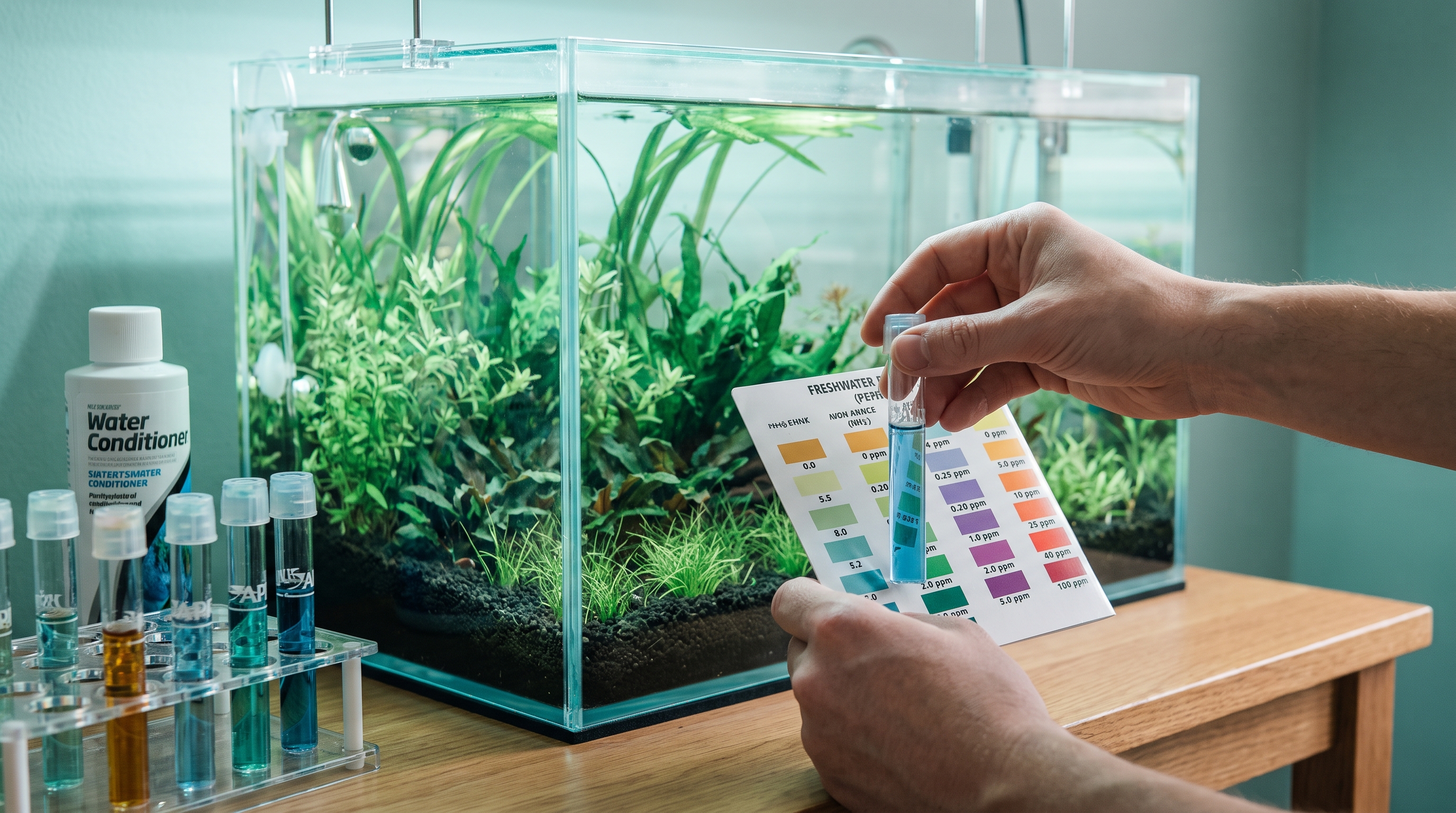
So you want to know how to cycle a tank the right way, not just the fast way. Here’s the direct answer: cycling means growing a colony of bacteria in your filter and substrate that converts ammonia into nitrite, then nitrite into nitrate, until ammonia and nitrite both read zero on a test kit. That colony is what keeps fish waste from poisoning the water. There’s no shortcut around growing it, but there are ways to do it faster and more safely than just tossing in fish and hoping.
The next sections cover what’s happening in the tank chemically, and how to do it without guessing.
What Cycling a Tank Actually Means
Every fish tank produces ammonia. It comes from fish waste, leftover food breaking down, and dying plant matter. Ammonia is highly toxic to fish even in small amounts, so a tank has to deal with it somehow.
That’s where cycling comes in. Cycling is the process of building up a colony of naturally occurring bacteria, often called nitrifying bacteria or “beneficial bacteria,” that eat the ammonia and convert it into a less toxic compound called nitrite. A second group of bacteria then converts that nitrite into nitrate, which is far less harmful and mostly gets removed through regular water changes.
So the chain looks like this:
- Ammonia (highly toxic) gets produced by fish waste and decay.
- Nitrite (still toxic, but less so) is produced when bacteria consume ammonia.
- Nitrate (much less toxic) is produced when a second bacteria group consumes nitrite.
A tank is “cycled” once it has enough of both bacteria types to process ammonia and nitrite as fast as your fish and filter produce them. If you want the deeper mechanics of exactly why this reaction happens and what each bacteria group needs to thrive, we cover it in our full breakdown of the aquarium nitrogen cycle.
Until that bacteria colony is established, ammonia and nitrite can build up fast enough to injure or kill fish. That’s the entire reason cycling matters.
Fish-In Cycling vs. Fishless Cycling
There are two ways to grow that bacteria colony, and it’s worth knowing the difference before you start.
Fish-in cycling means you already have fish in the tank, and the ammonia they naturally produce through waste and respiration feeds the bacteria colony as it grows. This is common with tanks that got fish before anyone realized cycling was necessary, which happens a lot with impulse buys.
Fishless cycling means you add ammonia directly (dosed by hand) with no fish present, and let the bacteria colony fully establish before any fish go in. This avoids putting live animals through the ammonia and nitrite spikes that fish-in cycling involves.
Both approaches can get you to a stable tank. But they carry very different risk profiles. Fish-in cycling requires watching your numbers closely and doing water changes the moment ammonia or nitrite climbs, because there are living animals absorbing the toxicity in the meantime. Fishless cycling removes that risk entirely, at the cost of patience: you’re staring at an empty tank for a few weeks.
If you already have fish in an uncycled tank, don’t panic and don’t rush to “fix” it by doing something drastic. Frequent, moderate water changes and daily testing are your main tools until the colony catches up.
How to Cycle a Tank, Step by Step
Here’s the practical version, whether you’re doing fish-in or fishless.
1. Set Up the Tank and Get an Ammonia Source Going
Get your filter, substrate, and decorations in place and fill the tank with dechlorinated water. Dechlorinator removes chlorine and chloramine so they don’t kill your bacteria colony before it starts, but it does not make the water safe from ammonia or nitrite. Those are separate problems, and it’s an easy assumption to get wrong.
If you’re cycling fishless, add ammonia directly (household ammonia with no additives, or a commercial ammonia source) to get a reading in the 2 to 5 ppm range on a test kit. If you’re cycling fish-in, your fish are already supplying the ammonia, just in smaller, more variable amounts.
2. Test Daily and Track the Trend
This is the part people skip, and it’s the part that tells you what’s happening. Test ammonia, nitrite, and nitrate every day (or every other day) and write the numbers down. A single test tells you almost nothing on its own. A trend over a week tells you everything: is ammonia climbing, holding steady, or finally starting to drop?
You’ll typically see ammonia rise first, then start falling as nitrite rises to take its place, then nitrite falls as nitrate rises. That handoff is the bacteria colonies establishing themselves in sequence.
Track it all in one place with {{ .Site.Params.appName }}.
Get Nitrify →3. Wait for Ammonia and Nitrite to Both Hit Zero
This is the step that can’t be rushed. The colony needs time to grow to match your ammonia load, and that’s a biological process, not a calendar one. Some tanks get there in under two weeks with a strong bacterial seed and warm water. Others take six weeks or longer with no seeding at all. Neither is wrong.
Keep feeding the ammonia source consistently (if fishless) so the bacteria have something to eat. Starving a partially established colony just slows it down further.
4. Confirm With a Full Testing Cycle
Once ammonia and nitrite both read zero within about 24 hours of adding your normal ammonia dose (or your fish’s normal waste load), test daily for several more days to confirm it holds. A one-off zero reading isn’t proof the colony is fully caught up yet. A repeated pattern of zero-and-zero is.
At that point, nitrate will be climbing, since nitrate is the end product and mostly leaves the tank through water changes rather than bacterial action. That’s expected and it means the cycle worked.
How Long Does a Tank Take to Cycle?
There’s a persistent idea that cycling always takes exactly four to six weeks. It’s a reasonable rough estimate, but treating it as a rule leads people to either panic when week four comes and goes with no progress, or add fish on a schedule instead of based on actual test results.
What determines the timeline:
- Water temperature. Nitrifying bacteria grow faster in warmer water, generally in the mid-70s to low-80s Fahrenheit.
- Bacterial seeding. Adding filter media, gravel, or filter sponge from an already-cycled, healthy tank introduces a working bacteria population instead of starting from nothing.
- Ammonia source consistency. A steady, moderate ammonia supply grows bacteria more reliably than sporadic dosing or a wildly overstocked tank dumping in more waste than any young colony can handle.
The honest answer to “how long will my tank take” is: watch your own numbers. A trend line telling you ammonia dropped by half this week compared to last week is far more useful than a countdown from a calendar.
🔬 Log your ammonia, nitrite and nitrate and Nitrify reads which stage of the nitrogen cycle your tank is in. Free, on every tier.
Try Nitrify →Can You Speed Up Cycling?
Yes, to a real degree. The fastest documented approach across the fishkeeping community is seeding: borrowing bacteria from a tank that’s already cycled.
That can mean running a spare filter alongside an established tank’s filter for a couple of weeks so it picks up a bacteria population, then moving it to the new setup. It can also mean putting a media bag or some gravel from a healthy, cycled tank into the new one. One long-running forum thread on the topic describes a hobbyist getting a tank to read zero nitrite within two weeks using exactly this approach: dosing ammonia to a set level, then adding a media bag from a cycled tank and a live plant, and leaving it undisturbed while testing. That’s not a scientific study, just one experienced keeper’s account, but it lines up with the basic biology: an established bacteria colony multiplies faster than one starting from zero.
Live plants can help too. They take up some ammonia, nitrite, and nitrate directly as a nutrient source (it’s the same reason liquid plant fertilizers list those exact compounds on the label), which takes a bit of pressure off the bacteria colony while it’s still growing.
What doesn’t speed things up: adding more fish, adding more filters without a bacteria source, or just waiting longer without addressing whatever’s slowing the colony down (usually temperature or an inconsistent ammonia supply).
Common Cycling Mistakes to Avoid
A few habits show up constantly in new-tank setups, and most of them make cycling slower or more dangerous rather than faster.
Adding fish on day one. A brand-new tank has no bacteria colony yet. Fish added immediately are the ones absorbing that ammonia and nitrite spike directly, a pattern often called new-tank syndrome. It’s one of the most common ways new fishkeepers lose fish, and it’s avoidable by cycling first or cycling very carefully with heavy monitoring.
Avoiding water changes entirely during cycling. The bacteria live on surfaces, not in the water column, so a water change doesn’t wipe out your progress. If anything, refusing to do water changes while ammonia or nitrite is climbing to unsafe levels is the riskier choice for any fish already in the tank.
Rinsing or replacing filter media in tap water on a schedule. Tap water contains chlorine or chloramine, which kills the bacteria colony you’re trying to grow. If media needs a rinse, do it gently in water siphoned out of the tank itself, never under the tap.
Panicking over cloudy water. A new tank often turns cloudy a few days after setup. That’s typically a separate, harmless bacterial bloom, not a sign of failure, and it usually clears on its own.
Assuming dechlorinated equals safe. Dechlorinator handles chlorine and chloramine. It has no effect on ammonia or nitrite. A tank can be fully dechlorinated and still be mid-crisis if the cycle hasn’t caught up.
How to Know When Your Tank Is Cycled
A cycled tank should consistently show:
- Ammonia at 0 ppm, even 24 hours after your normal ammonia source (fish waste or dosed ammonia) is added.
- Nitrite at 0 ppm, same timing.
- Nitrate present but under roughly 20 ppm, brought down by regular partial water changes.
That last target lines up with what most rescue and hobbyist care guides recommend, including a widely circulated betta rescue care sheet that puts nitrate at or below 20 ppm as the safe ceiling. The exact number some keepers aim for varies a little by species, but the pattern is the same everywhere: ammonia and nitrite at zero, nitrate low and controlled through water changes.
If you’re tracking your numbers by hand in a notebook or a spreadsheet, it’s easy to lose the thread of whether things are trending in the right direction. That’s the exact gap a dedicated water-test tracker like Nitrify is built to close: it reads your last several tests and tells you plainly which stage of the cycle you’re in.
Keeping a Cycled Tank Stable
Cycling isn’t a one-time event you finish and forget. A cycled tank stays cycled because the bacteria colony has ongoing access to enough surface area, oxygen, and food (ammonia) to keep functioning. A few habits keep it that way:
- Keep the filter running continuously. Bacteria need constant water flow and oxygen; long power outages or a shut-off filter can crash the colony.
- Don’t oversize your fish load faster than the bacteria can adjust. Adding a lot of new fish at once to an already-cycled tank can temporarily overwhelm the colony until it catches up, sometimes called a “mini-cycle.”
- Keep testing periodically even after cycling finishes. A stable tank can still drift if something changes, like a dead fish going unnoticed or a heater failing.
Regular testing is what turns “I think the tank is fine” into “I know the tank is fine.” You can check that with a simple, ongoing testing routine rather than only testing when something already looks wrong.
Frequently Asked Questions
How long does it take to cycle a tank? There’s no fixed number. It depends on your ammonia source, water temperature, and whether you seeded the filter with bacteria from an established tank. Some tanks show zero ammonia and nitrite within two weeks; others take six or more. Watch your own test results instead of counting days.
Can I add fish while my tank is cycling? You can, but it’s called fish-in cycling and it means keeping a much closer eye on ammonia and nitrite so they never sit at toxic levels. If you can wait, a fishless cycle avoids putting any fish through that stress at all.
Do water changes reset the cycle? No. The bacteria that process ammonia and nitrite live on your filter media, gravel, and other surfaces, not in the water itself. A water change removes dissolved waste, not the bacteria colony. Letting ammonia or nitrite spike is far riskier than changing water.
Why is my ammonia or nitrite stuck and not dropping? This usually means the bacteria colony hasn’t grown large enough yet to keep up with the ammonia you’re feeding it. Keep testing, keep the ammonia source consistent, and give it time. Overdosing ammonia, low temperatures, or a recent full media rinse in tap water can all slow things down.
Is cloudy water during cycling something to worry about? Usually not. Cloudiness in a new tank is typically a harmless bacterial bloom, a different bacteria population multiplying quickly and then dying back once things stabilize. It generally clears on its own within a few days.
Is dechlorinated water safe for fish right away? Dechlorinator neutralizes chlorine and chloramine, but it does nothing about ammonia or nitrite. A tank can have perfectly dechlorinated water and still be dangerous if it hasn’t finished cycling. Dechlorination and cycling solve two different problems.
Track Your Water With Nitrify
Cycling comes down to one question you end up asking yourself daily: where exactly is my tank right now? Log your ammonia, nitrite, and nitrate readings in Nitrify and it reads your trend to show which stage of the cycle you’re in, free, along with a plain Safe/Watch/Act verdict so you’re not left guessing what a number means. When you’re ready to know roughly when it’ll finish, Pro adds a completion-date prediction built from your own tank’s trend instead of a generic four-to-six-week guess.